
Why Does Kessler Park Feel So Different From the Rest of Dallas?
Cliff Freeman, Jr. September 10, 2026
Cliff Freeman, Jr. September 10, 2026
Kessler Park doesn't feel like the Dallas many people expect.
The streets curve. The terrain rises and falls. Mature trees create a canopy over homes that can look completely different from one another. And despite being in North Oak Cliff, just southwest of Downtown Dallas, parts of the neighborhood can feel surprisingly removed from the city around them.
That isn't accidental.
Kessler Park developed beginning in the 1920s, and its streets and homes were shaped around the area's natural terrain rather than forcing the neighborhood into a uniform grid. Today, you'll find historic architecture, wooded streets, hills, green space and quick access to other parts of Oak Cliff.
For buyers, though, all that character comes with something important:
You have to evaluate Kessler Park house by house, not just neighborhood by neighborhood.
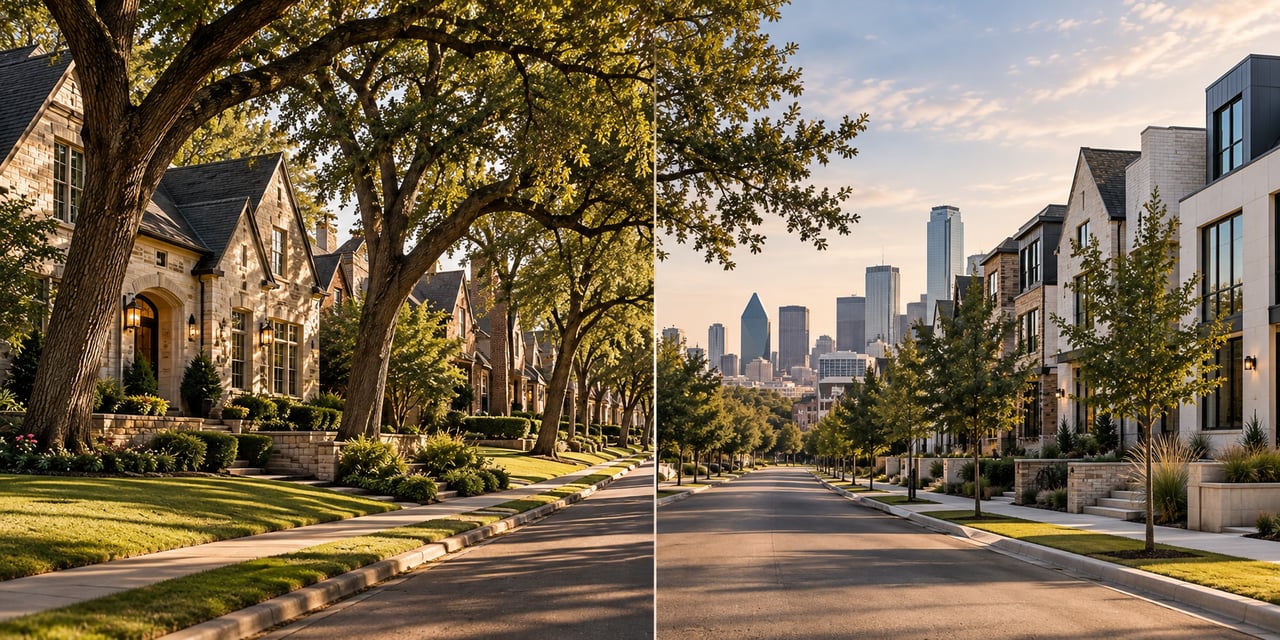
Drive through enough of Dallas and you start recognizing certain patterns.
Straight streets.
Flat terrain.
Newer subdivisions where homes were built within a relatively short period.
Then you get to Kessler Park.
The road curves.
The elevation changes.
A Tudor might sit around the corner from a Spanish Colonial Revival home. Keep driving and the architecture changes again.
And through the trees, you may suddenly remember that Downtown Dallas isn't very far away.
Kessler Park feels different because it was developed differently.
Its historic sections date back to the 1920s, and the irregular streets of the Kessler Park additions were designed in response to the area's hilly terrain. That relationship between landscape and architecture is still one of the neighborhood's defining characteristics today.
But the interesting question for a buyer isn't just why Kessler Park looks the way it does.
It's what living there actually means.
Kessler Park is in North Oak Cliff, southwest of Downtown Dallas.
That location is part of what makes the neighborhood interesting.
You can be surrounded by mature trees and historic homes without moving to the outer edges of the metroplex.
You're also near other established Oak Cliff destinations and neighborhoods, including the Bishop Arts area, while Stevens Park Golf Course forms an important part of the landscape around Kessler Park.
So geographically, Kessler Park isn't isolated.
It can just feel that way when you're inside it.
This may be one of the first things you notice.
Instead of imposing the same street grid across the entire area, portions of Kessler Park were laid out to work with the existing hills.
Historic documentation describes streets curving around hilltops and winding through the terrain toward Stevens Park. Houses were then oriented differently depending on those curves.
That sounds like a small planning decision.
It isn't.
It changes the experience of the neighborhood.
You don't always see ten blocks ahead.
Homes sit at different elevations.
Lots don't all relate to the street in exactly the same way.
Trees and terrain interrupt sightlines.
And the neighborhood unfolds as you drive through it rather than presenting itself all at once.
That's a big part of why Kessler Park can feel so different from neighborhoods built on flatter, more repetitive layouts.
This is where Kessler Park gets particularly interesting for home buyers.
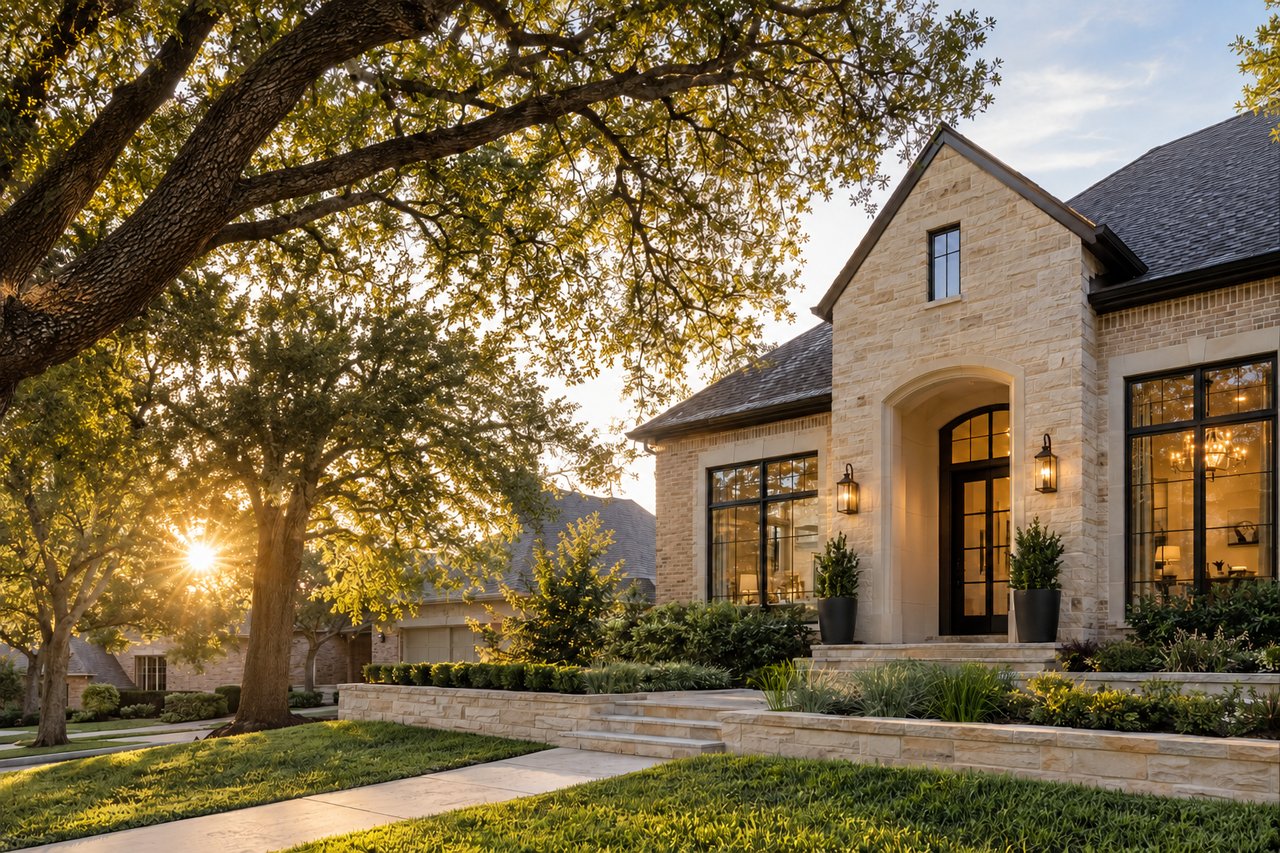
The historic district includes examples of Tudor Revival, Spanish Colonial Revival, Classical Revival and Georgian Revival architecture, along with bungalows and other influences.
And not every house has the same scale.
Some of the earlier areas include relatively modest revival-style bungalows.
Other sections contain larger, more elaborate residences with custom detailing and more substantial lots.
Later development added another layer to the neighborhood.
So when someone says:
“I want a home in Kessler Park.”
Our next question should probably be:
“What kind?”
Because two Kessler Park homes can offer very different experiences.
There's a difference between a newer neighborhood designed to look established and one that actually developed over generations.
Kessler Park falls into the second category.
The area's development began in 1923 with Kessler Square, followed by additional sections during the 1920s and later development. The neighborhood ultimately became a collection of multiple developments rather than one subdivision constructed all at once.
The first four developments, together with Stevens Park Golf Course, were listed on the National Register of Historic Places in 1994.
That history is visible.
Different streets have different housing patterns.
Different homes reflect different architectural periods.
And some properties retain details you simply aren't going to reproduce by selecting an upgrade package in a new-build community.
For the right buyer, that's the entire point.
Architecture gets most of the attention, but topography may be the quieter reason Kessler Park feels unusual.
Much of Dallas is associated with relatively flat terrain.
Kessler Park isn't.
Rolling terrain, limestone features and established tree cover influenced how parts of the neighborhood developed.
That can affect everything from the view out a window to how a home sits on its lot.
It can also create practical considerations when buying.
Slope.
Drainage.
Retaining structures.
Foundation history.
Landscaping.
Access.
Those aren't reasons to avoid a property.
They're reasons to evaluate the specific property rather than assuming every home in the neighborhood behaves the same way.
Another reason Kessler Park doesn't feel particularly urban in certain pockets is the amount of greenery woven into the area.
Stevens Park Golf Course dates to the 1920s and remains one of the neighborhood's defining green spaces. Historic documentation even describes the golf course as difficult to separate visually from the surrounding residential development.
There are also nearby trails and parks throughout this part of Oak Cliff.
That matters because Kessler Park's appeal isn't primarily about having a giant commercial district sitting in the middle of the neighborhood.
A lot of the appeal happens on the residential streets themselves.
The canopy.
The hills.
The architecture.
The landscaping.
The feeling of driving home.
Here's where the location becomes more interesting.
Kessler Park itself can feel quiet and residential.
But you're not disconnected from the activity elsewhere in Oak Cliff.
Dining, independent businesses, entertainment and other established Dallas neighborhoods are nearby. The Kessler Theater is one recognizable local destination in the broader area, while Bishop Arts provides another nearby concentration of restaurants, shops and activity.
That creates a particular lifestyle:
You don't necessarily need the restaurant downstairs from your house.
You can live on a quieter, tree-covered residential street and still have those things relatively close.
For some buyers, that's a better balance.
This is where we'd tell buyers to slow down.
An older home with character can be fantastic.
It can also be very different from buying something built five years ago.
Depending on the property, you may need to understand previous renovations, additions, electrical systems, plumbing, roofing, drainage, foundation conditions and how much original material remains.
And Kessler Park has another layer buyers should understand: preservation rules.
The Kessler Park Conservation District was established in 2005 and encompasses historic and postwar sections of the neighborhood.
That doesn't mean “you can't change anything.”
It means you should understand whether a particular property falls within applicable preservation or conservation boundaries and what that could mean for exterior changes or future plans before assuming your renovation idea will work.
If you're buying character because you love character, those protections may actually be part of the appeal.
You just need to know what you're buying.
This is especially important in neighborhoods with older housing stock.
Two listings can both say “updated.”
One might have undergone extensive work involving major systems, thoughtful restoration and carefully integrated additions.
Another might have new countertops and paint.
Those are not equivalent.
When touring Kessler Park, we'd want to look beyond the finishes.
When was the electrical updated?
What plumbing work has been done?
Has the foundation been evaluated or repaired?
What happened during previous renovations?
Were additions permitted?
What remains original?
What will likely need attention next?
A beautiful kitchen tells you what the kitchen looks like.
It doesn't tell you the entire story of an older house.
Kessler Park is a neighborhood where the lot and street matter almost as much as the house.
A listing gallery can show you the living room.
It can't fully show you how the street curves approaching the property.
Or how elevated the lot feels.
Or how much tree cover surrounds the home.
Or the relationship between neighboring houses.
Or whether you love that particular pocket of the neighborhood.
This is one of those places where we'd rather have a buyer spend extra time driving around before deciding:
“This is definitely where I want to live.”
Because Kessler Park isn't one repeated product.
That's precisely what makes it interesting.
Kessler Park could make a lot of sense if you want:
An established Dallas neighborhood rather than a newer master-planned community.
Architectural variety.
Mature trees and a greener residential environment.
A home with history or distinctive design.
Interesting terrain.
Proximity to central Dallas without living in a high-density urban environment.
And a neighborhood where individual homes can have genuinely different personalities.
It may make less sense if your priority is uniformity, newer construction, highly predictable lots or a home requiring as little age-related investigation as possible.
Neither preference is better.
They're just very different ways to buy a home.
Kessler Park's appeal isn't that it has one spectacular landmark.
It's that the neighborhood itself feels designed around things Dallas doesn't always give you at the same time.
History. Topography. Architecture. Trees. Proximity to the city.
The streets bend because the land bends.
The homes differ because the neighborhood developed over decades.
And the character people notice today isn't something that was added as a marketing feature.
It's the result of how this part of Oak Cliff grew.
That's why the most important question probably isn't:
“Is Kessler Park one of the prettiest neighborhoods in Dallas?”
It's:
“Would the things that make Kessler Park different make it better for the way you actually want to live?”
Kessler Park is in North Oak Cliff, southwest of Downtown Dallas. It sits within an established part of Oak Cliff known for historic neighborhoods, mature trees and access to central Dallas.
The area's natural topography includes rolling terrain, and portions of the neighborhood were intentionally laid out to follow those contours rather than flattening them into a rigid street grid.
Buyers can encounter Tudor Revival, Spanish Colonial Revival, Colonial and other revival styles, bungalows and later architectural influences. Housing style, scale, lot configuration and age can vary considerably from one section to another.
Yes. Portions of Kessler Park are included in a historic district listed on the National Register of Historic Places, and the area also includes a locally established conservation district.
Yes. One of Kessler Park's defining advantages is that its wooded, residential environment is relatively close to Downtown Dallas and other central-city destinations.
Look beyond cosmetic renovations. Depending on the individual property, buyers may want to investigate major systems, previous additions and renovations, drainage, foundation conditions, roofing, permits and any preservation requirements that could affect future exterior work.
Kessler Park is the kind of neighborhood where the street, lot, architecture and history can matter just as much as the number of bedrooms on the listing.
If you're considering Kessler Park or comparing neighborhoods across Dallas, The Cliff Freeman Group can help you look beyond the photos and understand what you're actually buying.
Explore more DFW neighborhood guides:
TCFG.HOMES/DFW-BLOG
Thinking about buying or selling in DFW?
Call The Cliff Freeman Group at 469-936-4377
Stay up to date on the latest real estate trends.
Dallas Real Estate
DFW Real Estate
Dallas Real Estate

DFW Real Estate
McKinney TX Real Estate

DFW Real Estate

North Texas Real Estate
Market Reports & Local Trends
North Texas Market Insights
Find out why our clients and our team of expert agents are the happiest in the Dallas-Fort Worth Metroplex. We are thrilled to have the opportunity to work with you!