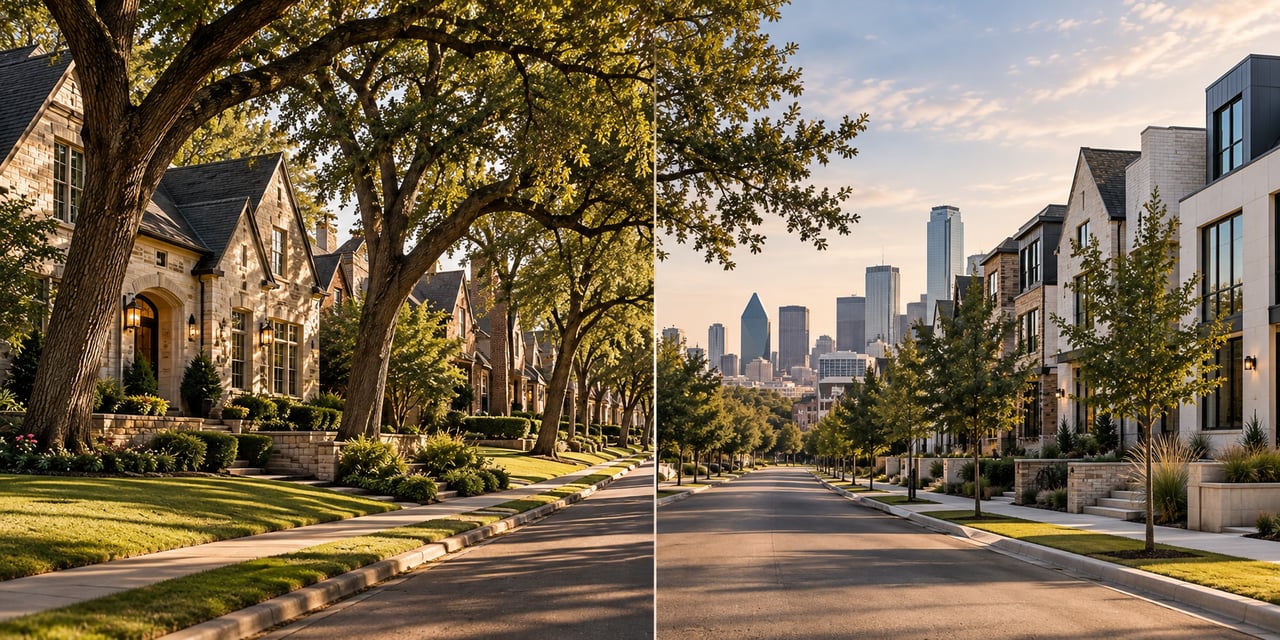
Why Can Two Homes With the Same Dallas Address Feel Like Completely Different Neighborhoods?
Cliff Freeman, Jr. September 24, 2026
Cliff Freeman, Jr. September 24, 2026
Search for homes in Dallas and you can find two properties with the same city in the address, similar prices and maybe even similar square footage. Then you drive to both and they feel completely different.
One may sit beneath mature trees on a quiet residential street surrounded by older architecture. The other may be closer to a major road, newer development, apartments, retail or a completely different style of housing.
Both say Dallas, TX, but they may have very little else in common.
Dallas is not one uniform housing market. It is a collection of neighborhoods, development patterns and housing eras. The City also has historic districts, conservation districts and other zoning overlays that can apply differently from one area to another.
That is why Dallas buyers should not ask only, “Do I like this house?” They should also ask, “Do I like this particular part of Dallas?”
Two Dallas homes can feel completely different because the city name tells you very little about the immediate environment around the property. The street, neighborhood, housing age, lot pattern, nearby development, traffic, architecture, parks and commercial corridors can all change the experience.
For buyers, the practical lesson is simple: Do not buy a Dallas ZIP code. Evaluate the house, the street and the surrounding neighborhood separately.
When someone relocating to DFW says, “We want to live in Dallas,” that sounds specific. It really is not.
Dallas contains everything from historic residential districts to newer infill, established neighborhoods around major parks, dense urban areas, quiet interior streets and homes sitting surprisingly close to busy commercial corridors.
Even the City's zoning map is layered. Dallas maps base zoning alongside historic overlays, conservation districts, neighborhood stabilization overlays, planned developments and other property specific regulations.
So filtering a home search to Dallas is only the beginning. The interesting part starts when you zoom in.
This is something listing photos cannot explain very well.
Imagine two similar Dallas homes. The first is several blocks inside an established residential neighborhood. Traffic is mostly local. Mature trees line the street. Most of what you see from the front porch is other houses.
The second may be only a short distance away, but it sits near a larger thoroughfare. Traffic patterns may be different. Getting in and out may feel different. The surrounding land uses may change. Even the way the property feels when you stand in the front yard can be different.
Dallas formally classifies streets according to their role within the transportation network, including factors such as traffic volume, mobility and their relationship with neighborhoods.
That is why we would never evaluate a Dallas home from the listing photos alone. The street is part of the property.
Dallas did not develop all at once, and that shows up in its housing.
One search can put you in front of Tudors, bungalows, mid century homes, ranches, larger traditional houses, renovated older properties and newer infill. Sometimes several of those can exist relatively close to one another.
Take the M Streets as an example. The City specifically uses Tudor architecture when explaining the M Streets Conservation District. Dallas also has conservation districts in areas including Lakewood, Kessler Park, Greenway Parks, Vickery Place and Hollywood Santa Monica.
Historic districts add another layer. Dallas Landmark Districts include areas such as Swiss Avenue, Munger Place, Junius Heights and Winnetka Heights. These districts contain concentrations of structures connected through architecture or history and are governed by district specific preservation criteria.
That history is one reason Dallas can change visually so quickly as you move around the city.
Established could mean mature trees and homes from the 1920s. It could mean ranch style homes built decades later. It could describe a neighborhood where many original homes remain, or an older area experiencing significant renovation and infill.
Those differences matter because buyers are not only choosing an architectural style. They may also be choosing different questions to investigate.
For an older property, that could include:
The age on the listing is only the starting point.
This distinction matters in Dallas.
You can find a beautifully remodeled home with a new kitchen, updated bathrooms and polished interiors. That tells you what happened inside that property. It does not tell you what is happening around it.
Before buying, zoom out. What is directly behind the property? What is at the end of the street? What happens when you leave the neighborhood? Are nearby properties primarily residential? Is there active redevelopment? How close are you to commercial uses or larger roads?
The City of Dallas provides address level mapping that allows buyers to examine zoning and overlays alongside parks, trails, floodplains and other contextual information.
That kind of research can tell you things the kitchen photos cannot.
Buyers naturally compare bedrooms, bathrooms and square footage. In Dallas, we would pay just as much attention to the lot.
A property could sit on a quiet interior street, a corner, near a major road, beneath substantial mature tree cover, beside newer infill or close to a park or commercial area. Those characteristics can change privacy, maintenance, traffic exposure, drainage considerations and how you actually use the property.
Two houses with almost identical interiors can therefore produce very different ownership experiences.
A neighborhood name can be useful because it gives you historical and geographic context. But life does not suddenly change because you crossed an invisible line on a map.
Homes near the edges of neighborhoods may interact with surrounding roads, commercial districts or adjacent residential areas differently from homes several blocks inside. Even formal districts can have very specific boundaries, and Dallas maintains separate mapped layers for historic and conservation district subdistricts.
So when a listing uses a recognizable neighborhood name, do not stop there. Look at the actual property and the blocks immediately around it.
Near White Rock Lake. Near Bishop Arts. Near Lower Greenville. Near Downtown.
All of those statements may be geographically accurate and still tell you very little about what happens immediately outside the front door.
Being near a place you love is not necessarily the same as living within the residential pocket you are picturing. If location is a major reason you like a house, ask a more useful question:
How do I actually get from this house to the place I care about?
The answer can tell you more than the number of miles shown on the listing.
Before you fall in love with the photos, zoom out on the map. Look at the immediate street, surrounding housing, nearby major roads, commercial areas, parks and trails, lot position, zoning, relevant overlays and nearby development.
Then tour it.
And when you do, do not drive directly to the house and immediately leave. Drive the surrounding streets. Approach the property from different directions. See what sits behind it. Look at what changes two or three blocks away.
A ten minute drive around the neighborhood can answer questions that an hour of scrolling through listing photos cannot.
This deserves special attention because Dallas has both.
A Dallas Landmark District is a formally designated area protected by a historic district ordinance. Work on properties within these districts can be subject to district specific preservation criteria and may require a Certificate of Appropriateness.
A Conservation District works differently but can also affect what can be changed. Dallas uses these districts to preserve specific architectural or cultural characteristics, with regulations tailored to each neighborhood.
Dallas has residential historic districts including Swiss Avenue, Munger Place, Junius Heights and Winnetka Heights, along with conservation districts including M Streets, Lakewood, Kessler Park and Vickery Place.
If you are considering a property in one of these areas, verify the rules for that specific address before assuming you can make a particular exterior change.
Because your future buyer is going to evaluate many of the same things you are evaluating now.
Maybe you are comfortable living near a busy road because the house gives you everything else you want. That can be a reasonable tradeoff, but the location characteristic does not disappear when you eventually sell.
The same applies to unusual lots, surrounding development, architecture and other property specific features.
A beautiful renovation can change a house. It cannot move the lot.
Do not compare only the countertops. Compare the complete package:
House: What are you physically buying?
Lot: How does the property sit within the block?
Street: What happens immediately outside the property?
Neighborhood: What is the surrounding residential environment?
Location: How does it connect to the places that matter to your routine?
Rules: Are there zoning, historic or conservation considerations relevant to the property?
That is a much more useful comparison than simply saying both homes are “in Dallas.”
Because sometimes they effectively are.
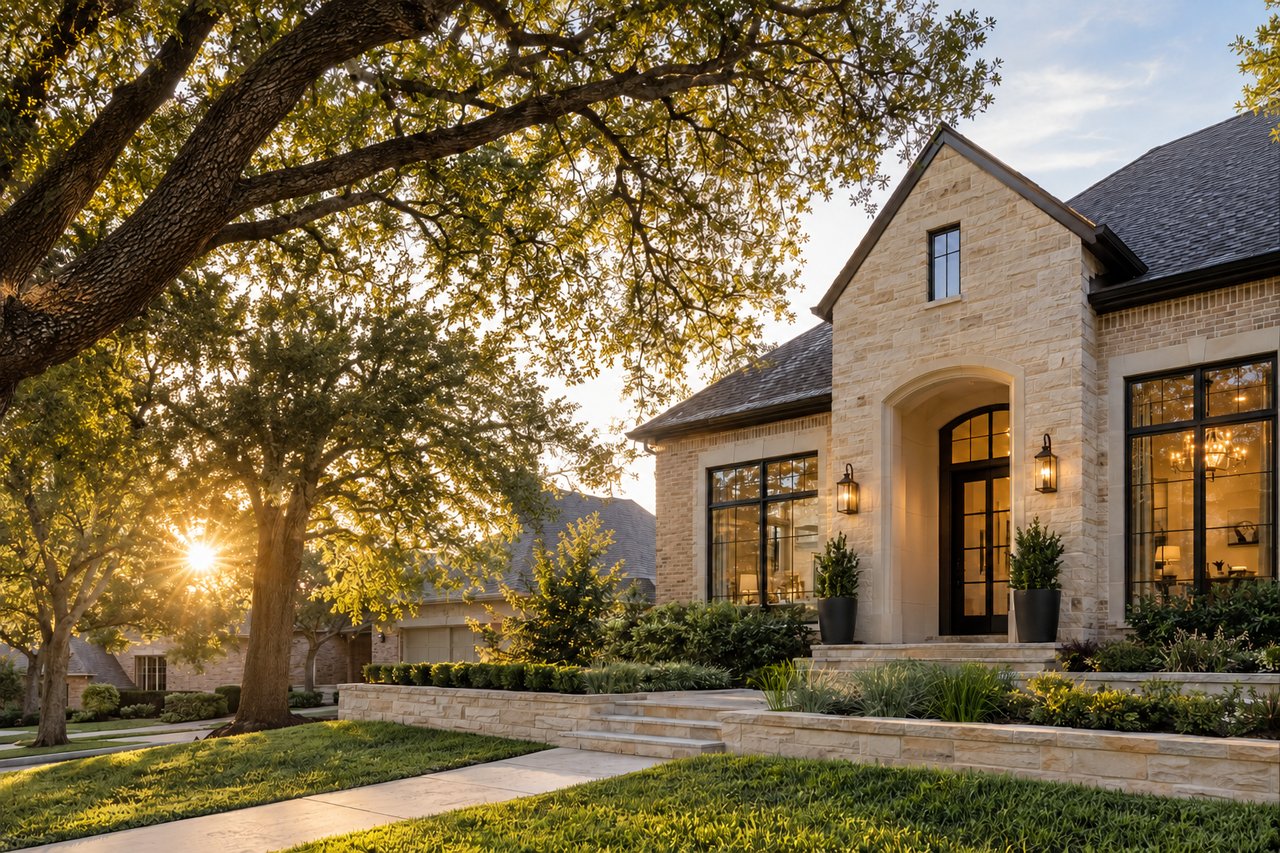
A Dallas address can put you beneath mature trees in an older residential pocket, near a major commercial corridor, beside newer infill, inside a conservation district or within an area shaped by a completely different period of the city's growth.
That is part of what makes buying in Dallas interesting. It also means you need to look beyond the listing.
The house tells you what you are buying. The surrounding blocks tell you where you are actually going to live.
How important is the specific neighborhood when buying in Dallas?
Very. Housing age, architecture, street patterns, nearby development, parks and commercial areas can differ substantially across Dallas. The city name alone is not enough to evaluate a property's location.
Can two homes in the same Dallas ZIP code feel completely different?
Yes. ZIP codes are mailing geographies, not descriptions of neighborhood character. Always evaluate the immediate street and surrounding area rather than assuming the ZIP code tells the whole story.
How can I research a Dallas property before touring it?
Start with maps and listing information, then check City of Dallas resources for zoning and relevant overlays. Look at the immediate streets, major roads, surrounding properties, parks, commercial areas and nearby development before touring.
What is a Dallas Conservation District?
It is a zoning designation intended to preserve specific architectural or cultural characteristics of an area. Regulations are tailored to each district.
Is a Conservation District the same as a historic district?
No. Dallas maintains separate historic and conservation district designations with different regulatory structures. Buyers should verify which, if either, applies to a specific property.
Should I drive through a neighborhood before making an offer?
It can be extremely useful. Listing photos focus on the property. Driving the surrounding streets can help you understand traffic, neighboring properties, nearby development and how the location connects to the rest of your routine.
Two houses can both say Dallas, TX and give you completely different versions of living in Dallas. That is why finding the right property is not only about bedrooms, bathrooms and finishes.
You are choosing the blocks around the house too.
If you are comparing Dallas neighborhoods, The Cliff Freeman Group can help you look beyond the listing photos and understand how the house, street and location fit together.
TCFG Blog: TCFG.HOMES/DFW-BLOG
Call The Cliff Freeman Group: 469-936-4377
The Cliff Freeman Group | eXp Realty
Stay up to date on the latest real estate trends.
Dallas Real Estate
DFW Real Estate

Dallas Real Estate

DFW Real Estate

McKinney TX Real Estate

DFW Real Estate

North Texas Real Estate
Market Reports & Local Trends
North Texas Market Insights
Find out why our clients and our team of expert agents are the happiest in the Dallas-Fort Worth Metroplex. We are thrilled to have the opportunity to work with you!