What Makes the "M Streets" Feel Like the Dallas People Hope to Find?
Cliff Freeman, Jr. August 17, 2026
Cliff Freeman, Jr. August 17, 2026
There is a version of Dallas that a lot of people picture before they actually move here.
Big trees. Older homes. Front porches. Sidewalks. Restaurants nearby. Streets where every house doesn't look like it came from the same floor plan.
Then they arrive in DFW and realize just how many different versions of “Dallas” there actually are.
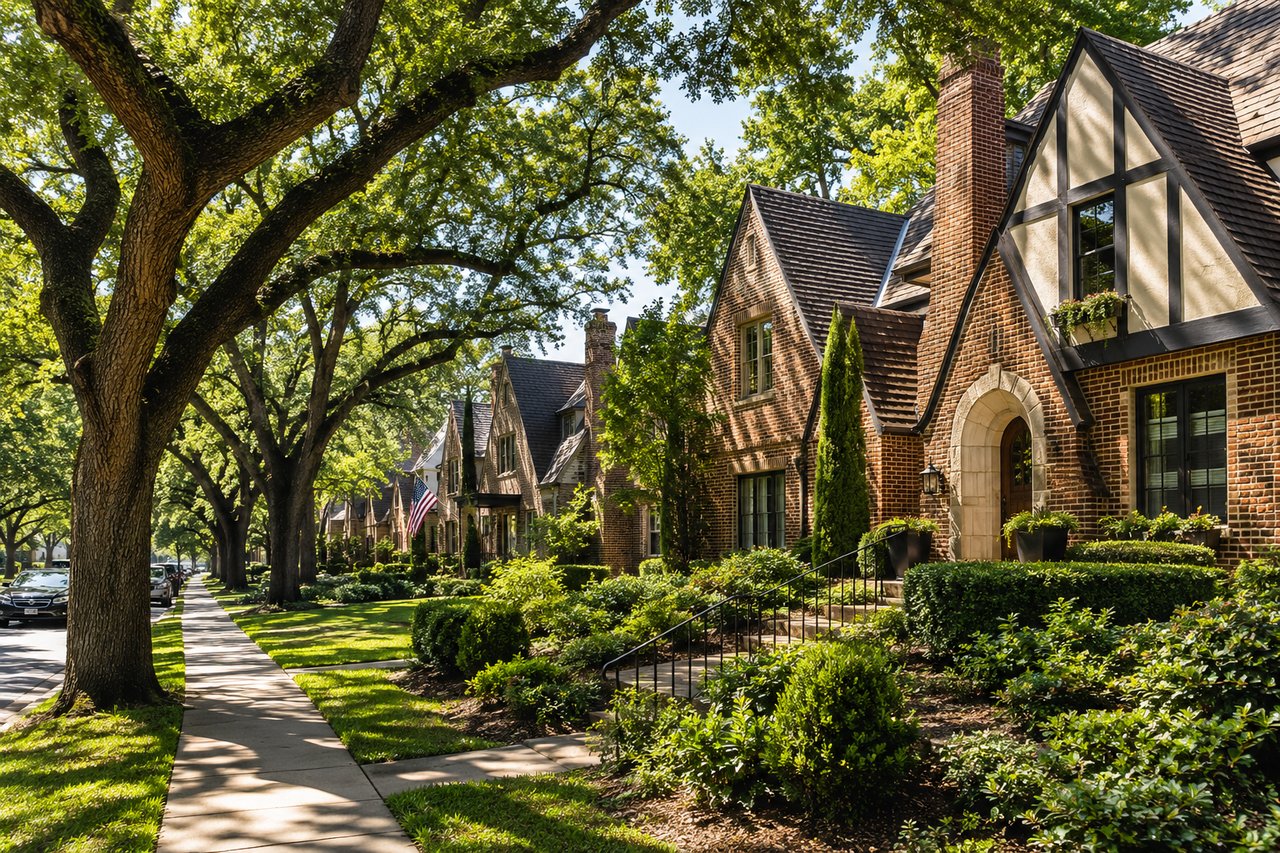
The M Streets in East Dallas, historically known as Greenland Hills, are one of the places that can make that original picture feel real. The neighborhood dates to the 1920s, and the City of Dallas has specifically recognized its collection of Tudor Revival architecture as worth preserving.
But the houses are only part of why people connect with it.
M Streets feels established. Not old for the sake of being old, and not polished to the point where everything looks the same.
It feels like Dallas has been happening here for a while.
The M Streets are in East Dallas, near Lower Greenville, with easy access to central Dallas and neighborhoods like Lakewood. The historic neighborhood is also known as Greenland Hills.
And yes, there's a reason for the name.
Many of the area's recognizable residential streets begin with the letter M, which helped give the neighborhood the nickname people use today.
The location is a big part of the appeal because this isn't a neighborhood where you have to drive twenty minutes just to find somewhere interesting to eat.
Lower Greenville is nearby.
Central Dallas is nearby.
But once you turn onto the residential streets, the atmosphere changes.
That's when M Streets starts making sense.
Spend enough time looking at newer North Texas neighborhoods and you get very good at recognizing patterns.
Same builder.
Same setbacks.
Same handful of elevations.
Same age of construction.
M Streets works differently.
You'll see Tudors, cottages, Craftsman and Prairie influences, renovations, additions, and homes that have clearly changed with the families who lived in them. The City of Dallas has described Greenland Hills as having one of Texas' strongest collections of mid sized Tudor Revival homes.
That architectural consistency doesn't mean uniformity.
Actually, it's almost the opposite.
One house catches your attention because of its steep roofline. The next has original brickwork. Another has been renovated while keeping enough of the original exterior that it still belongs on the street.
You start looking at individual houses rather than rows of houses.
And that changes the experience.
It's easy to write “mature trees” in a listing description and move on.
But spend time in an established Dallas neighborhood and you realize how much trees change a street.
They soften the houses.
They create shade over sidewalks.
They make homes feel settled into the landscape rather than placed on top of it.
And, maybe most importantly, you can't manufacture that overnight.
A builder can install beautiful landscaping around a brand new house. What they can't install is decades.
M Streets has had those decades.
That's part of why a relatively ordinary afternoon walk can tell you more about the neighborhood than a perfectly photographed listing ever will.
One of the strongest arguments for M Streets has almost nothing to do with the homes themselves.
It's what sits nearby.
Lower Greenville has become one of Dallas' recognizable restaurant and entertainment corridors, with dining, coffee, shopping, and nightlife concentrated around Greenville Avenue.
That matters because there's a difference between saying a neighborhood is “convenient” and actually having places you want to use nearby.
Maybe dinner doesn't require planning your whole evening around traffic.
Maybe you grab coffee nearby on Saturday morning.
Maybe friends come to your side of town because there are several places to choose from.
Those little things start becoming routines.
And routines are what turn a location into a lifestyle.
This might be the biggest distinction.
There isn't a giant entrance announcing that you've arrived.
There isn't one clubhouse everything revolves around.
There isn't a perfectly coordinated amenity package.
M Streets wasn't created to sell buyers a lifestyle in a brochure.
Greenland Hills was originally developed in the 1920s, and nearly a century of homes, landscaping, renovations, neighbors, and changes have shaped what exists today.
You feel that history without the neighborhood feeling like a museum.
People are still remodeling.
Homes still change hands.
Styles evolve.
New families move in.
The neighborhood keeps changing, just more slowly than a brand new development.
That gives it something difficult to replicate.
A past.
This is also where we need to be realistic.
Character isn't maintenance free.
A 1920s or 1930s home isn't the same purchase as a house completed last year.
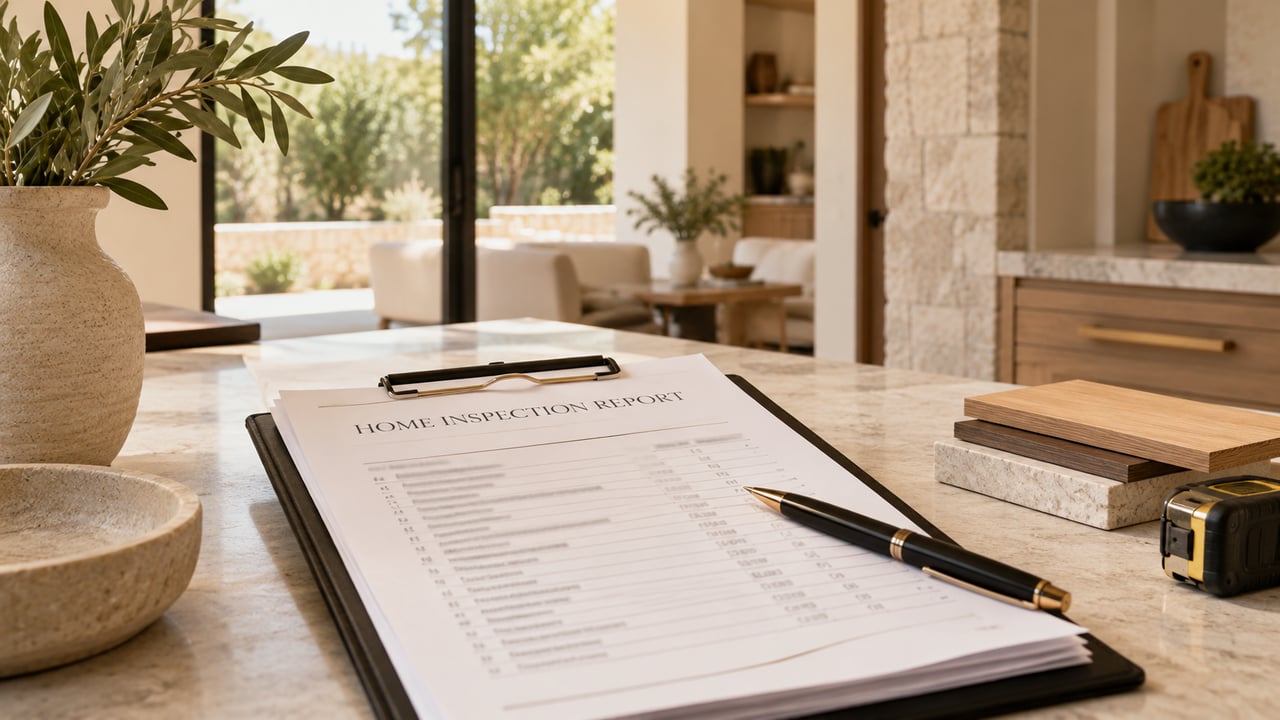
Depending on the property, buyers may need to pay closer attention to previous renovations, electrical systems, plumbing, roofing, foundations, windows, additions, drainage, and how thoughtfully updates were completed.
And two homes that look similar from the street can be completely different once you start reviewing what's been done behind the walls.
That's why buying in M Streets isn't just about finding the cutest Tudor on the block.
You have to understand the house you're actually buying.
For some buyers, that process is part of the appeal.
For others, new construction and fewer unknowns will simply make more sense.
Neither buyer is wrong.
There's another reason the neighborhood has retained so much of its identity.
M Streets is Dallas Conservation District No. 9, and the city's regulations are intended to protect and enhance the neighborhood's architectural and cultural characteristics. Dallas also has a separate M Streets East conservation district.
That matters.
People often say they love neighborhoods with “character,” but character can disappear surprisingly quickly when redevelopment has no relationship to what was there before.
Conservation rules can also mean homeowners don't have unlimited freedom to change an exterior however they want.
That's a tradeoff worth understanding before buying.
But it's also part of why you can walk through M Streets today and still immediately know where you are.
This is where buyers coming from farther out in DFW sometimes have to recalibrate.
The same budget can buy very different things depending on where you are in North Texas.
In M Streets, you're not necessarily optimizing for the newest house or the most square footage.
You're paying for location.
Architecture.
An established streetscape.
Proximity to Lower Greenville and central Dallas.
And a neighborhood identity that has taken decades to develop.
As of June 2026, the median listing price in M Streets was about $957,250, although individual homes vary substantially based on size, condition, updates, lot, and exact location.
That number isn't there to tell you whether the neighborhood is “worth it.”
That's personal.
It simply explains why comparing an M Streets home to a newer suburban property based only on price per square foot misses a big part of what buyers are choosing between.
If you're seriously considering M Streets, here's what we'd recommend.
Tour the house.
Then come back when you don't have a house to tour.
Walk a few blocks.
Drive the streets you skipped the first time.
Head toward Greenville Avenue.
Notice which parts feel quieter and which put you closer to activity.
Look at the houses that aren't for sale.
That's important.
When you're touring homes, you're naturally focused on countertops, bedrooms, closets, and whether your furniture will fit.
When you come back without a showing scheduled, you finally get to evaluate the neighborhood.
And with M Streets, the neighborhood is a pretty big part of what you're buying.
M Streets tends to make sense quickly for buyers who care about the details surrounding the house.
They want character.
They like older architecture.
They'd rather have different homes on every block than perfect consistency.
They want restaurants and city life nearby, but they don't necessarily want to live in a high rise or directly above the action.
And they're comfortable accepting some of the realities that come with an older home in exchange for something newer construction can't easily reproduce.
For a buyer whose priorities are maximum square footage, brand new systems, large lots, and master planned amenities, there may be better fits elsewhere in DFW.
That's fine.
M Streets isn't compelling because it offers everything.
It's compelling because it knows exactly what it is.
A lot of people move to Dallas with an image in their head.
They hope they'll find a street with big trees.
A house that doesn't look like every other house.
Somewhere they can walk around and feel like the neighborhood existed before they got there.
A restaurant they actually like a few minutes away.
A part of the city that feels residential without feeling disconnected from everything else.
M Streets doesn't perfectly match that picture for every buyer.
No neighborhood does.
But it gets surprisingly close.
And maybe that's why people remember it.
Not because it's the biggest, newest, or flashiest version of Dallas.
Because for some people, it feels like the Dallas they were hoping to find.
The M Streets are located in East Dallas near Lower Greenville. The historic neighborhood is also known as Greenland Hills and is part of an established residential area close to central Dallas.
The nickname comes from the many residential streets in the area whose names begin with the letter M.
The neighborhood is particularly known for its Tudor Revival homes, although buyers will also encounter other architectural influences and homes that have been renovated or expanded over time. The City of Dallas has specifically recognized the area's significant collection of Tudor architecture.
Not exactly. M Streets, historically Greenland Hills, is a distinct residential neighborhood associated with the broader Lower Greenville area. Lower Greenville generally refers to the neighborhoods and commercial activity around Greenville Avenue.
M Streets is designated by Dallas as Conservation District No. 9. A conservation district uses zoning regulations to preserve architectural and cultural characteristics of a neighborhood.
Prices vary significantly by property, but Realtor.com reported a median listing price of approximately $957,250 in June 2026. Condition, renovations, size, location, and architectural character can all affect pricing.
Whether you're comparing Dallas neighborhoods, thinking about relocating to North Texas, or trying to figure out which part of DFW actually fits the way you want to live, the right neighborhood can matter just as much as the right house.
Explore more DFW neighborhoods and real estate insights:
TCFG Blog: tcfg.homes/dfw-blog
Thinking about buying or selling in DFW?
Call The Cliff Freeman Group at 469-936-4377
Stay up to date on the latest real estate trends.
DFW Real Estate

Dallas Real Estate
DFW Real Estate
McKinney TX Real Estate

DFW Real Estate

North Texas Real Estate
Market Reports & Local Trends
North Texas Market Insights
Local Market Insights & Analytics
Find out why our clients and our team of expert agents are the happiest in the Dallas-Fort Worth Metroplex. We are thrilled to have the opportunity to work with you!